Taking an Under 13 team to an international EYBL stage is not “just another trip”. It is a real accelerator: pace, physicality, reads, emotional pressure, and learning how to manage mistakes.
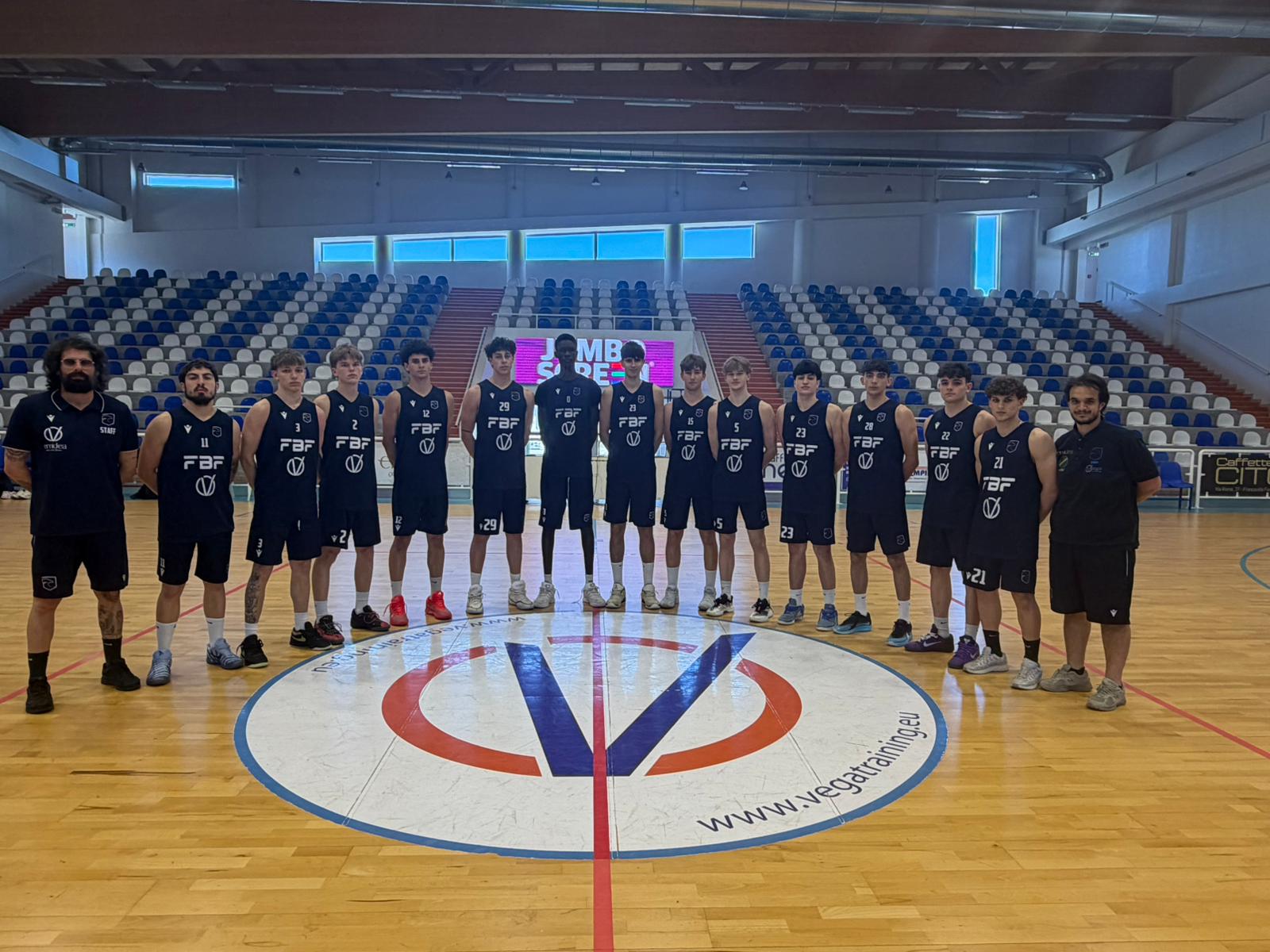
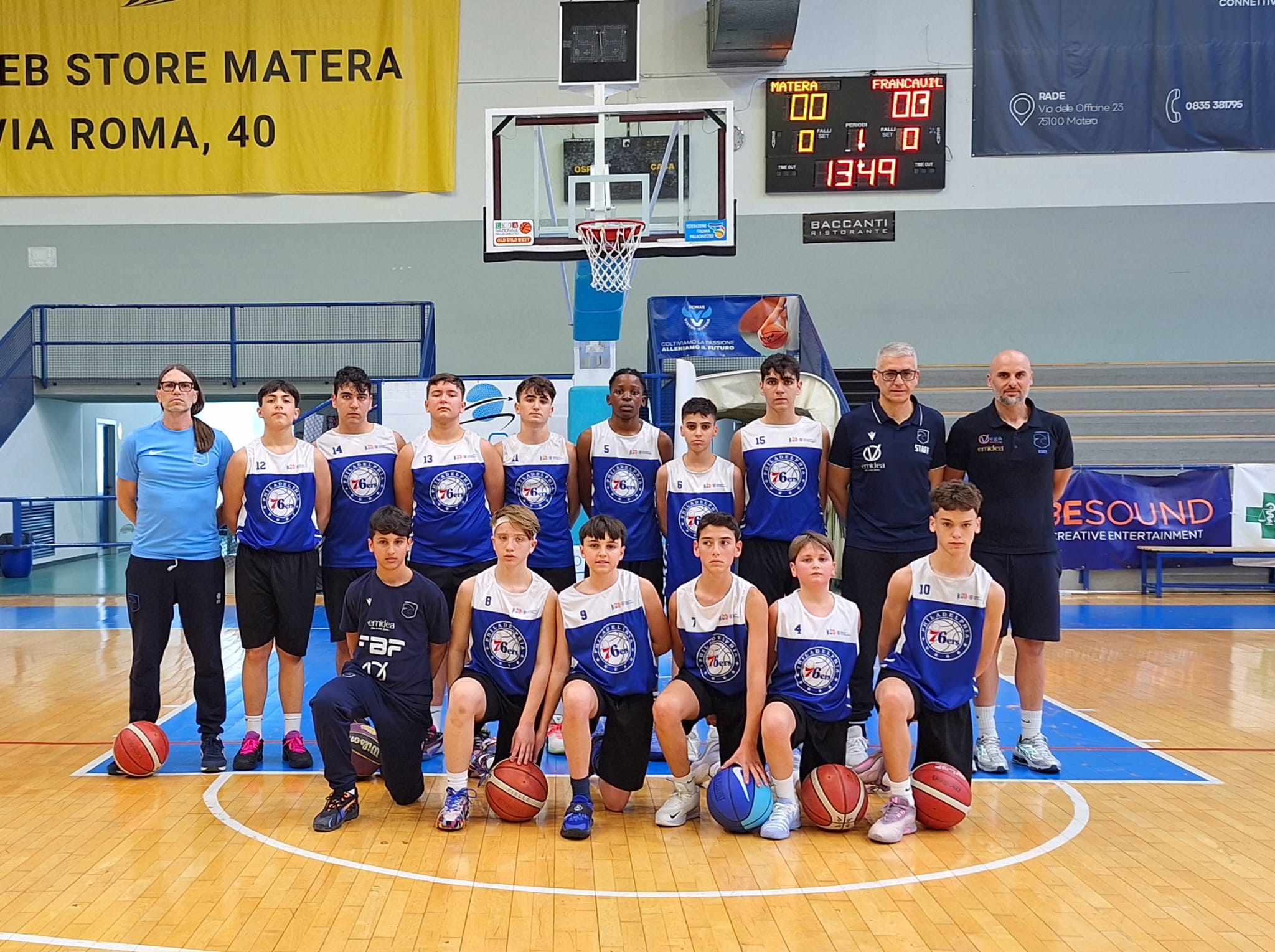
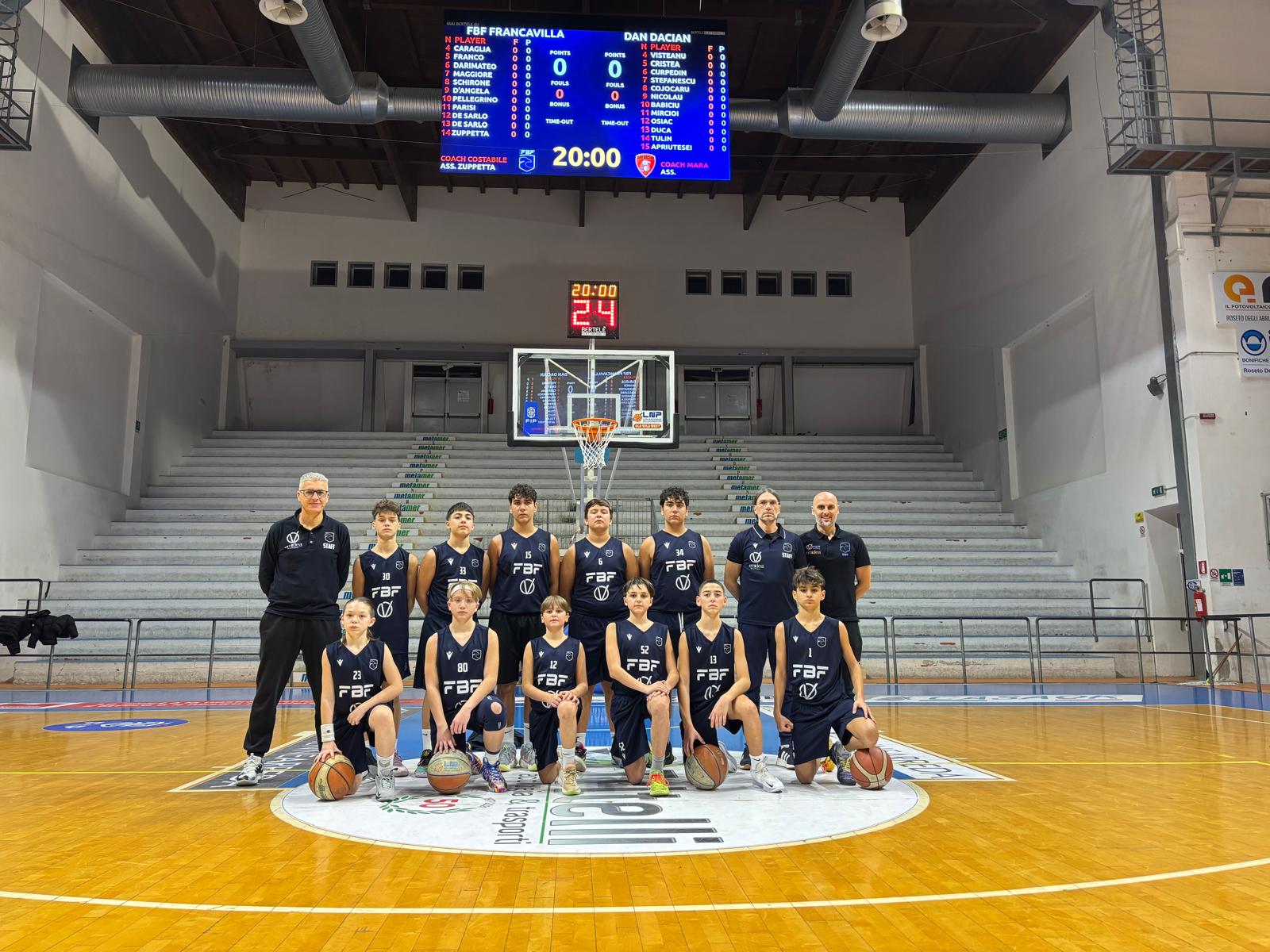
In Roseto degli Abruzzi, at PalaMaggetti, our boys lived three intense days of high-level basketball against top youth programs: PGC Cantù, Moncalieri, College Borgomanero, Roseto (hosts), Unibasket Lanciano, and the Romanian powerhouse Dan Dacian.
This is exactly the direction FBF has been building for a long time: giving our players real chances to compete against the best Italian and European teams, through prestigious tournaments that become a true investment in their development.
Schedule and opponents: four games, no easy matchups
In Roseto, FBF U13 played four official games (all at PalaMaggetti):
- PGC Cantù – FBF
- FBF – Dan Dacian (ROU)
- Unibasket Lanciano – FBF
- FBF – Moncalieri
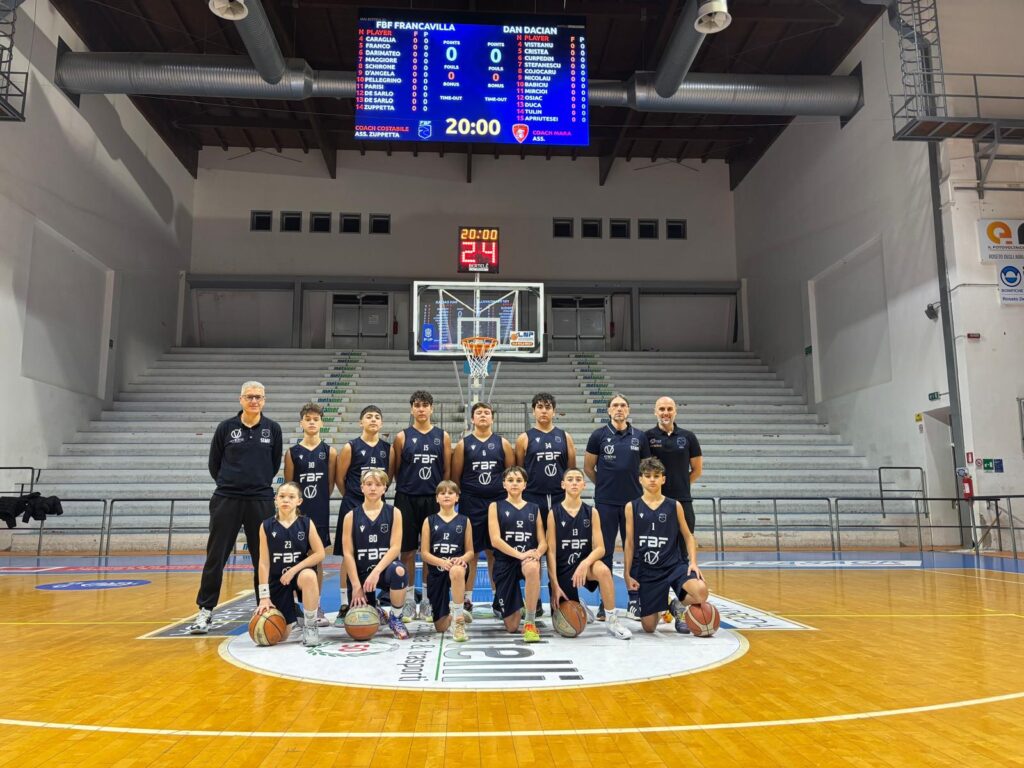
The tournament, game by game
Opener: a strong win vs Cantù
A “heavy” start straight away, against a name that needs no introduction in Italian youth basketball. The team answered in the best way:
PGC Cantù U13 – FBF Francavilla U13 42–67
From the very first game we had to manage an unexpected issue: our captain Giuseppe Darimateo was sick with flu symptoms and fever. Despite that, he pushed through, played against Cantù, and was truly decisive.
The game opened up early: after a balanced first quarter, FBF took control before halftime and confirmed it in the second half. In short: the right mindset, real intensity, and the ability to keep the level high when you are leading.
The hardest lesson: Dan Dacian, respect to the winners
Against the Romanian Dan Dacian, we faced the toughest game of the stage:
FBF Francavilla U13 – Dan Dacian U13 50–110
On that day Giuseppe Darimateo could not step on the court, because his condition did not allow it.
There is no point sugarcoating it: the gap was big, and it must be accepted for what it is. Dan Dacian showed what it means to have size, pace, consistency, and mental toughness for the full game. Respect to the winners.
At the same time, these games are gold if you use them the right way. They force you to understand where you lose time, where you lose contact, and where you mentally “drop” a possession. And they give you one simple truth: at this level, every detail matters.
Lanciano slips away: a real battle, until the end
Against Unibasket Lanciano, it was one of those games that stays with you because it feels possible until the final minutes:
Unibasket Lanciano U13 – FBF Francavilla U13 67–60
Still not at his best, Giuseppe Darimateo tried to be there anyway, to help his teammates and bring energy and leadership.
The start was promising, then Lanciano flipped the momentum and built a margin that we could not fully close in the final stretch. It is the classic kind of game that teaches two key things: managing momentum and keeping defensive consistency when the opponent raises the pressure.
Closing on the right path: win vs Moncalieri
In the last game, the team responded with character:
FBF Francavilla U13 – Moncalieri Basketball U13 83–62
Despite not being in ideal physical condition, Giuseppe Darimateo made a decisive impact and earned the MVP recognition for the game.
It was not an easy start, then FBF adjusted and pulled away to a +21 final win. A strong result, because it comes after a loss and requires mental toughness: tournaments like this are played well if you can reset and go again.
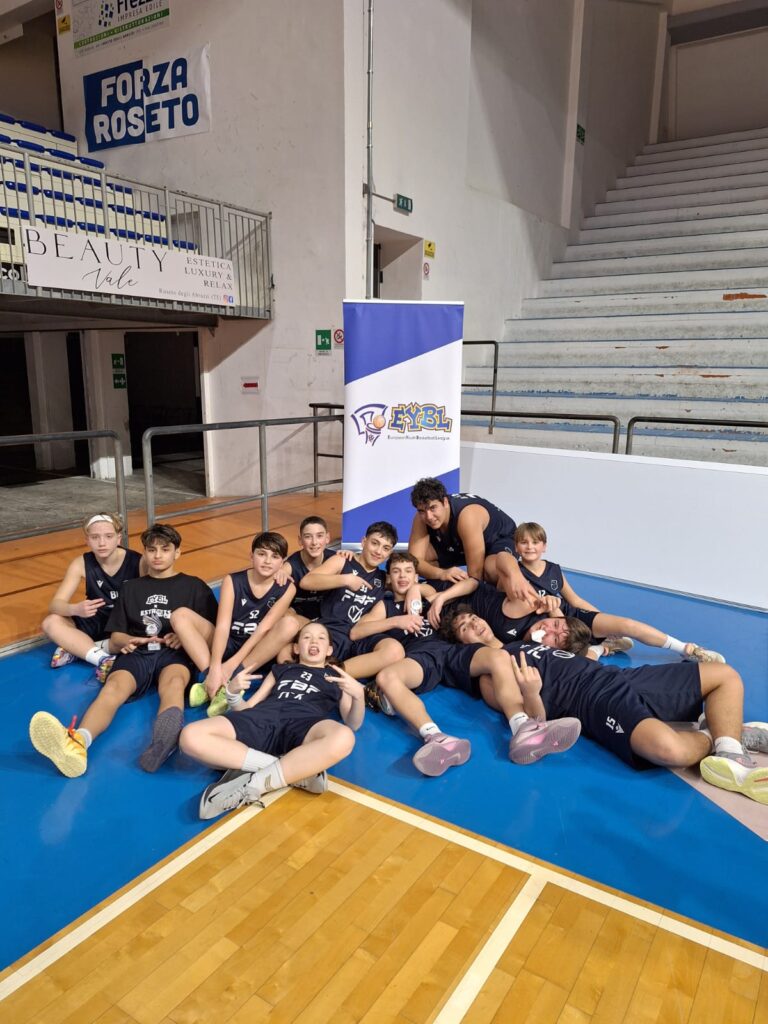
A key point: shared minutes, real experience for everyone
In an international experience like this, at this age, the goal is clear: team growth.
That is why every athlete received playing time, as it should be. The value of an EYBL stage is not only the result, but the chance for each player to experience a higher pace and intensity live, and to bring home awareness, motivation, and new responsibilities.
Final balance: 2 wins, 2 losses — but above all, growth
The final record says two wins (Cantù, Moncalieri) and two losses (Dan Dacian, Lanciano).
But the most important result is not the 2–2. It is the context.
For a U13 group, playing against such different realities (Italian and international) in just a few days means:
- faster learning (mistakes → immediate adjustments → next game);
- stronger personality and responsibility on the court;
- higher training standards after the tournament, because the players have seen what it really takes.
Individual recognitions
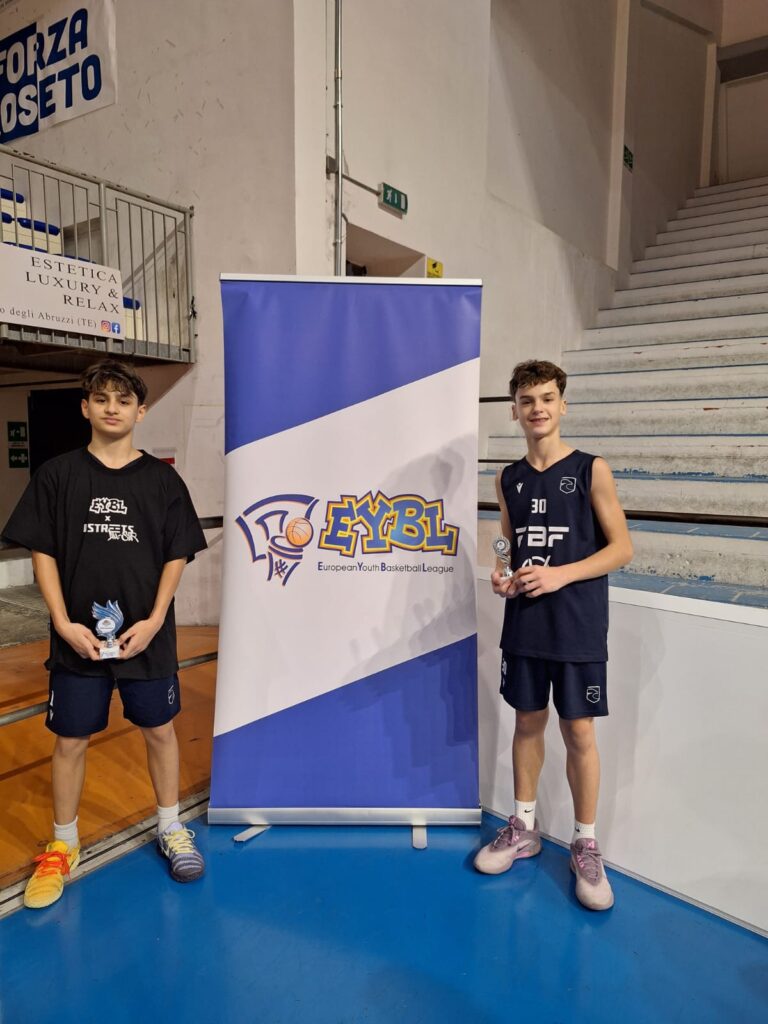
MVP — Giuseppe Darimateo
Our captain lived a very tough stage: from the first game he was sick with flu symptoms and fever, yet he insisted on playing vs Cantù and made a decisive impact.
He then had to miss the game vs Dan Dacian, because he was not fit to play. Still, he tried to return and support the team vs Lanciano, bringing presence and leadership even with limited energy.
In the win vs Moncalieri, despite not being 100%, he made the difference and deserved the MVP title.
Award / mention — Alessandro Pellegrino
During the stage, Alessandro Pellegrino received an award/recognition for standing out.
It was not a “courtesy” award: Alessandro was one of the team’s technical leaders for consistency and impact. The numbers say it clearly: he was FBF’s top scorer with 18.5 points per game, and also one of the most active on passing lanes with 3.5 steals per game. In a tournament played at a very high pace, keeping this kind of offensive weight game after game is not easy.
Minutes leader — Andrea Franco
In such an intense tournament, consistency matters: Andrea Franco was the player with the highest average minutes for FBF (35:15 per game). Constant presence, pace, and availability — the kind of contribution that does not always make headlines, but keeps the team alive.
Best rebounder — Giorgio De Sarlo
If we talk about hard work and impact near the basket, the reference is Giorgio De Sarlo: 10.3 rebounds per game, including 6.0 offensive rebounds per game. That means extra possessions, second chances, and physicality against often bigger opponents.
Playmaking and solidity — Matteo Parisi
Matteo Parisi brought balance: 2.0 assists per game and a clear rebounding contribution as well, with 7.5 defensive rebounds per game. In an international context, keeping order and putting teammates in the right spots is extremely valuable.
The youngest player of the tournament — Gabriele Zuppetta (2015)
A special mention for Gabriele Zuppetta (born 2015), two years younger than the category and the youngest player of the tournament.
He stepped on the court for a total of 4 minutes, and he finished the stage with 9 total minutes played across the four games. At that age, being inside an international tournament at this level is not automatic — it is a sign of courage and a clear step in the journey.